Dryer Vent Inspection
A dryer vent inspection is a documented assessment of the exhaust path, from the transition duct behind the appliance to the exterior termination, carried out before any cleaning scope is written. It establishes how long and how tortuous the run is, what the duct is made of, whether the exhaust discharges outdoors through a damper that opens under load, and whether lint or a restriction is limiting airflow. The remedy a vent needs is not always cleaning.
Why the assessment comes before the scope
The U.S. Fire Administration reports that failure to clean was the leading factor contributing to the ignition of clothes dryer fires in homes from 2018 to 2020, at 31 percent of incidents in the National Fire Incident Reporting System. That is why the work exists; it is not a scope of work. USFA describes lint as a highly combustible material that accumulates in the dryer and the vent, where it leads to reduced airflow, and notes that blockage can equally come from animal nests or from damage to the venting system itself. Cleaning answers only the first.
What a dryer vent inspection assesses
Run length and routing
The inspector measures developed duct length and counts elbows. Codes cited by USFA require dryer vents to be metal with smooth interior finishes, sections securely supported and firmly sealed together, and total vent duct length not exceeding 35 feet, shorter if there are turns or bends. USFA explains that where a run is too long or has many bends, moisture in the warm air condenses on the vent surfaces, attracting lint, until the accumulated lint creates resistance.
Transition duct material and listing
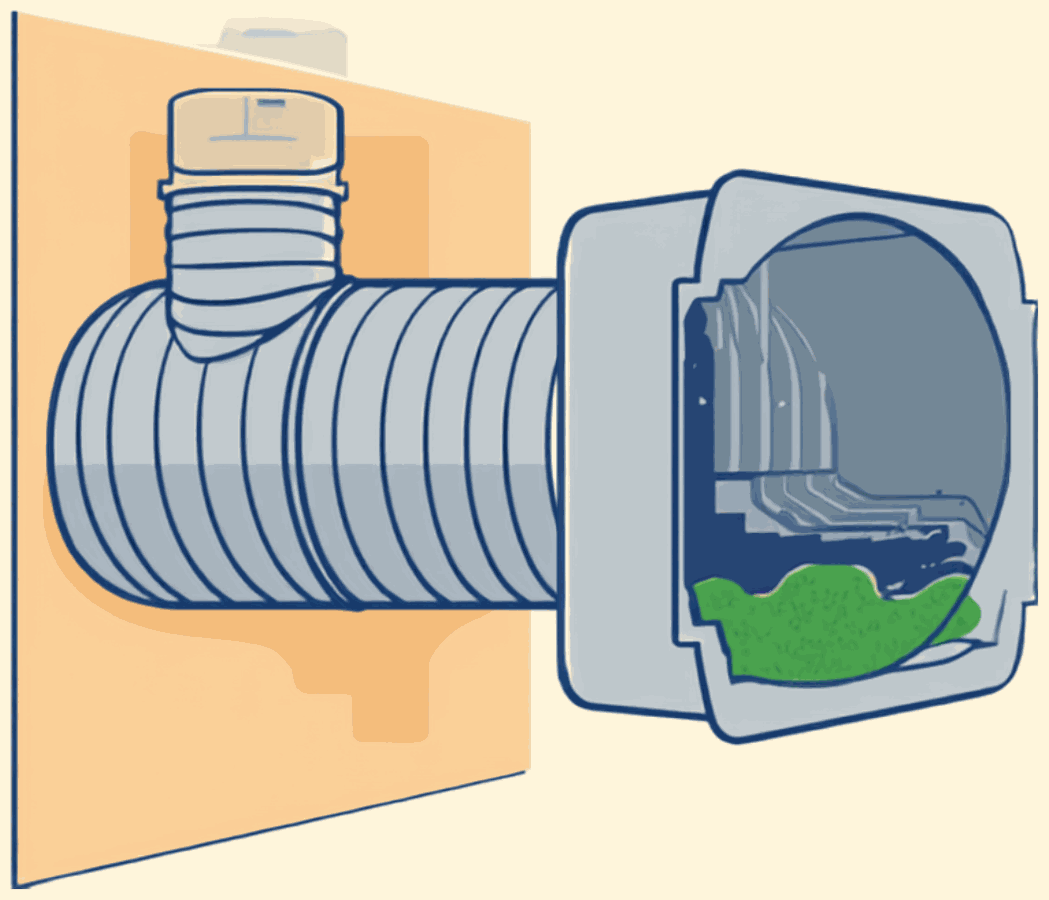
The connector between appliance and wall is a recurring source of recordable defects. Codes require flexible transition ducts to be no longer than eight feet, not concealed within construction, and listed and labeled in accordance with Underwriters Laboratories 2158A. The Consumer Product Safety Commission tells owners to replace plastic or foil accordion-type ducting with rigid or corrugated semi-rigid metal duct, because the flexible type more easily traps lint and is susceptible to kinks or crushing. USFA adds that plastic can provide additional fuel for a fire.
Termination, damper and discharge point
Codes require dryers to be exhausted directly to the outdoors, and venting into attics, soffits, ridge vents or crawl spaces is expressly prohibited. USFA warns that faulty installations venting into an attic, crawl space, chimney or interior walls can cause indoor air deterioration and mold buildup. Verification belongs in the record: with the dryer running, the outdoor vent covering should open and exhaust air should be escaping.
Lint accumulation and restricted airflow
USFA names two symptoms an occupant can report: heavy clothes such as blue jeans or towels taking a long time to dry, and clothes that feel hotter than usual at the end of the cycle, either of which makes a clogged dryer vent exhaust the likely problem. The inspection pairs those reports with lint depth at the connector and each accessible elbow, and with whether the venting behind the dryer is damaged, crushed or restricted.
What the inspection produces
A record worth filing lists, per appliance: run length and elbow count, duct material, transition duct length and listing, termination type and discharge location, damper behaviour observed with the dryer running, lint accumulation found, and photographs where access permits. It closes with a disposition per unit rather than one verdict for the building: cleaning, repair, or no work at all.
When inspection is the right first call
For one appliance, inspection and cleaning are usually one visit; across a portfolio they should not be. Across a portfolio the runs are often concealed and near-identical, so a defect that was designed in repeats on every stack. Inspecting first yields a per-unit inventory to budget against. Where lint loading is the finding, the follow-on is commercial dryer vent cleaning; where disconnected joints, leaking seams or damaged duct are the finding, it is duct repair and sealing. Forced-air HVAC in the same building is assessed separately under commercial air duct cleaning.
Schedule a dryer vent inspection
Inspections are booked by phone so appliance count, dryer type and access are established before dispatch. Call (832) 777-5400 to schedule, or use the contact page and ask for an inspection rather than a cleaning quote.
Dryer vent inspection FAQs
How often should a dryer vent be inspected?
No federal agency sets a fixed inspection interval for dryer vent lines. Inspect when the run has changed, when drying times lengthen, or before committing to a cleaning scope across a portfolio, so the assessment defines the work rather than following it.
Who inspects dryer vents?
The U.S. Fire Administration directs the work to qualified service personnel, and says a gas-powered dryer should be inspected by a professional annually so the gas line and connection are intact and free of leaks. Capability matters more than title: the inspector must open the vent path, measure the run, identify the duct material and reassemble the connection without kinking it.
What does an inspection find that a cleaning does not?
Cleaning removes accumulated lint. Inspection identifies what put it there and what cleaning cannot correct. Building codes prohibit venting into attics, soffits, ridge vents or crawl spaces, and the U.S. Fire Administration notes that faulty installations venting into an attic, crawl space, chimney or interior walls can cause indoor air deterioration and mold buildup. A crushed duct survives a cleaning.
How long is a dryer vent duct allowed to be?
Under the building codes cited by the U.S. Fire Administration, total vent duct length should not exceed 35 feet, and shorter if there are turns or bends. The flexible transition duct connecting the dryer to the exhaust duct system must be no longer than eight feet, not concealed within construction, and listed and labeled in accordance with Underwriters Laboratories 2158A.
What are the signs a dryer vent needs to be inspected?
The U.S. Fire Administration names two an occupant can see: heavy clothes such as blue jeans or towels taking a long time to dry, and clothes that feel hotter than usual at the end of the cycle. The Consumer Product Safety Commission adds clothing still damp at the end of a typical cycle. The outdoor vent covering should also open while the dryer runs.